
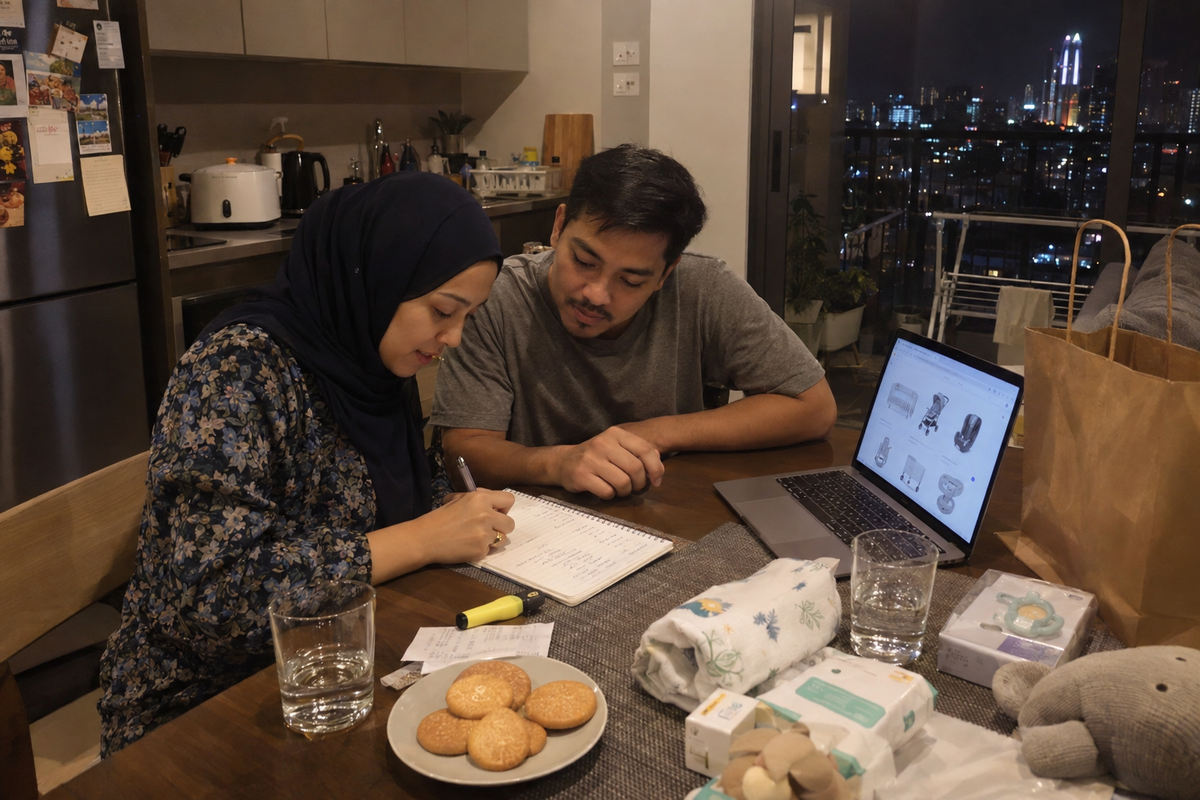
A few thoughtful preparations can make the first days at home feel more manageable. Start with what your family will use, and give yourself permission to leave the rest for later.
Preparing for a baby can quickly turn into an endless shopping list. Yet some of the most useful things you can arrange are simple: a place for everyday supplies, a meal someone else will cook, and a clear plan for getting help.
This guide brings those decisions together. Work through it at your own pace, with your partner or anyone who will support you. You can also get our free two-page Before-Baby Home Checklist to print, tick off and keep nearby.
1. Start with what you will reach for every day
Think through an ordinary change of clothes or nappy. Gather a small supply of nappies, wipes or washcloths, a changing mat, a few clean outfits and a laundry basket. Keep the supplies together so another caregiver can find them easily.
Wash clothes and reusable cloths according to their labels. Avoid filling every drawer in advance: sizes, preferences and the pace of your laundry routine will become clearer after your baby arrives.
For feeding supplies, start with your own plan and ask your maternity or feeding-support team what you need. There is no single shopping list that fits every family.
2. Prepare a separate space for sleep
Set up a cot or bassinet with a firm, flat mattress and a fitted sheet. Keep pillows, loungers, toys and loose bedding out of that space, and agree with every caregiver that your baby goes on their back for every sleep. The American Academy of Pediatrics recommends room sharing, with baby in their own sleep space, for at least the first six months.
A lounger belongs to actively supervised awake time and does not replace a cot or bassinet. If your baby falls asleep in a lounger, move them to their appropriate sleep space. You can read the AAP's safe-sleep guidance and speak with your care team about your circumstances.
3. Make room for the parent's needs
Prepare a comfortable spot with drinking water, a snack, a phone charger and a clean cloth nearby. Set aside easy-to-wear clothes and the personal care items your maternity team recommends. Keep charging cables and small items out of your baby's reach.
Save important contact details in your phone: your maternity unit, clinic and any feeding-support service you plan to use. Share them with the person supporting you. Having the right number ready is one less thing to search for when you need it.
4. Turn offers of help into small, clear tasks
When someone says, “Let me know if you need anything,” suggest something specific. A meal drop-off, a grocery run or help with laundry is easier to organise when everyone knows what to do.
- Food: Who can arrange a few simple meals or replenish groceries?
- Home: Who will handle dishes, laundry and essential errands?
- Family: Who can help with older children or pets, if needed?
- Visitors: What visiting arrangements feel comfortable, and who will update relatives?
Write down a name beside each task. Keep the plan flexible: needs can change from one day to the next.
5. Keep a “later” list
Before buying another item, check what you already have and what friends or family intend to give. Extra decor, duplicate accessories and a large wardrobe can wait until you know what suits your space and routine.
For anything you choose to borrow or buy second-hand, check its condition, instructions and any relevant safety or recall information before use. Ask a qualified local source if you are unsure.
6. Do one final walkthrough
Check your hospital or birth team's own packing guidance. Put documents, comfortable clothes and baby essentials together, plan transport, and prepare a suitable car seat if you will travel home by car. Ask your care team about follow-up arrangements before you leave.
Then choose just three priorities for the coming week. Your home does not have to look finished. A few useful essentials, a suitable sleep space and people who know how to help are a meaningful place to begin.
Make it yours: Our free checklist includes tick boxes, a support plan and space for your own notes. Sign up below to open the printable PDF.


Leave a comment
This site is protected by hCaptcha and the hCaptcha Privacy Policy and Terms of Service apply.